Bajaur War between Pakistan and Afghanistan
Bajaur war (1960-61) was a very important event which is largely forgotten. It decisively put an end to the conspiracies and clandestine help of rebels by Afghanistan in the tribal region and NWFP province of Pakistan.
Most of us know that Afghanistan was the only country that did not recognize Pakistan at the time of its creation.
Why a Muslim country did not recognize a neighbouring Muslim country?
Background
To know the background we have to go back in history to the year 1893. It is the establishment of Durand line.
The Durand Line is the 2,640-kilometer (1,640-mile) international border between Afghanistan and Pakistan. It was established in 1893 by an agreement between Sir Mortimer Durand of British India and Afghan Amir Abdur Rahman Khan.
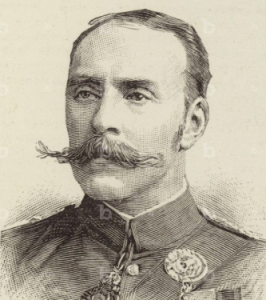
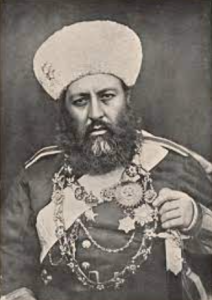
The agreement was intended to demarcate spheres of influence and ultimately define the border between British India and Afghanistan.
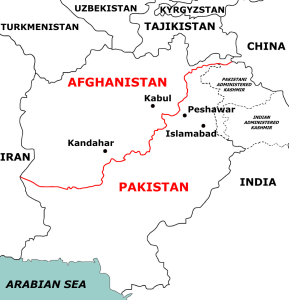
The line primarily divides the Pashtun tribal areas.
The Durand Line was drawn during the “Great Game” era, a period of intense rivalry between the British and Russian empires for control of Central Asia. It was intended to demarcate spheres of influence of the two empires.
The reason why Afghanistan did not accept Pakistan as a new country was that according to them the Durand Line was applicable only till the time British ruled India. After the end of the British rule, this line should have been abolished and whole NWFP should have been included in Afghanistan. It may be interesting to note that Afghanistan has not formally recognized Pakistan even now.
In July 1947 a referendum was initiated by the British Indian government on status of NWFP in which they had to decide to join either India or Pakistan.
Overwhelming majority of 95%+ voted to join Pakistan.
Strained relations:
This should have settled the issue but Afghanistan was not satisfied.
Hostilities broke out after Afghan Prime Minister Mohammad Daoud Khan, who was a vocal opponent of the Durand Line, started to undermine the situation in border areas of Pakistan.
By 1948, Afghanistan was providing armaments and funding to proxies inside the Tirah and Razmak regions of Northwest Pakistan and fuelled the demand for “Pashtunistan”, a separate homeland for Pashtun speaking community in Pakistan.
In response, Pakistan launched a military raid against fighters who advocated for Pashtunistan in 1949, subjecting their villages to aerial bombardment. Subsequently, the Pakistan Air Force crossed the border into Afghanistan and bombarded part of Paktia Province.
Ultimately, the Afghan invasion was brought to a halt following Pakistani airstrikes in Afghanistan’s Kunar Province.
In the late 1950s, the Afghan Army, attacked the Pakistani village of Dobandi and subsequently crossed the border and occupied a strategically vital railway link in Chaman−Quetta.
Pakistan Army retook the pass and pushed Afghan troops back to the border after a week of heavy fighting.
Assasination of Liaqat Ali Khan:
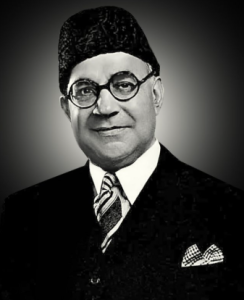
Relations between the two states severely deteriorated in 1951, when Saad Akbar Babrak, an Afghan national, assassinated the then Prime Minister of Pakistan, Liaquat Ali Khan, in Rawalpindi during a public rally.
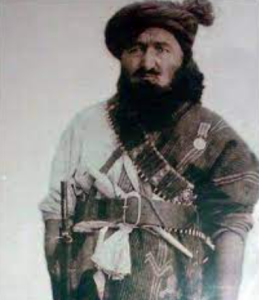
On 30th March 1955, Afghan demonstrators attacked and torched the Pakistani embassy in Kabul and consulates in Kandahar and Jalalabad, following which diplomatic relations were severed by Pakistan. The areas surrounding Bajaur and other parts of the Afghanistan-Pakistan border saw extensive armed border skirmishes.
Infiltrations into Bajaur:
Afghanistan launched the Bajaur campaign in early 1960s to invade and infiltrate KPK and unite it with Afghanistan.
In September 1960, by the orders of King Zahir Shah and Prime Minister Daud Khan Afghan irregulars and regular military troops (nearly 1000) in civilian clothing crossed into Bajaur and Dir which is adjascent to Bajaur (north).
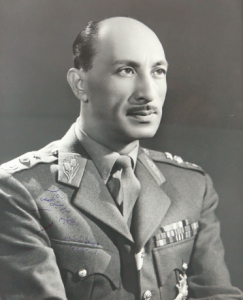
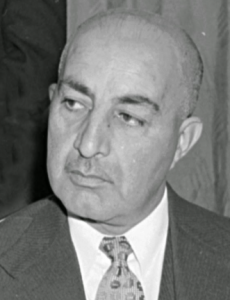
The Afghan insurgents were forced to withdraw after skirmishes with Pakistan Army and the newly formed Bajaur Scouts.
Batmalai raid:
In March 1961, Afghanistan provided resources worth of 170 million Afghanis, cash, and arms to weapons and ammunition to proxies under the leadership of a rebel Fazl Akbar, to incite an uprising in the Batmalai district of Bajaur.
The Pakistan Air Force led by Air Marshal Asghar Khan took action by bombing the area where the ammunition dump was stored and destroyed it.
Another raid took place in May 1961. The insurgents engaged with local tribesmen led by Nawab of Khar and retreated after suffering heavy casualties.
In May 1961 skirmishes took place in the area of the Khyber Pass too. Pakistani government announced that regular Afghan troops had struck Pakistani border posts. They were squarely defeated by Pakistan Army led by General Musa Khan.
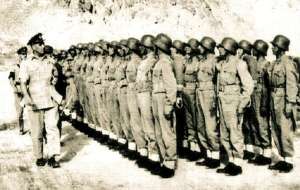
Gen Musa with captured Afghan troops
The Pakistan Air Force bombed Afghan positions in retaliation. On 22nd May, Pakistani warplanes (F-86 Sabre jets) bombed bases of raiding Afghan troops in Baganandail, Bajaur, Dir and the Khyber pass. They also attacked Afghan Army positions in Kunar, Afghanistan.
Although the Royal Afghan Air Force had seven MiG-17 squadrons, there was no resistance.
This war ended and with complete destruction of Afghanistan Armed Forces and a complete victory for Pakistan Armed Forces led by the President Field Marshal Ayub Khan and Chief of Army Staff General Musa Khan.
References:
- Christine Fair, C.; Watson, Sarah J. (18 March 2015). When Afghanistan
invaded Pakistan. University of Pennsylvania Press. ISBN 978-0-8122-4690-2.
- Hali, Sultan M (12 August 2016). “Breaking the myths of Pakistan ruining
Afghanistan”. Pakistan Today. Retrieved 20 June 2022.
- Ram, S. (2002). Encyclopaedia of Afghanistan: Kingship in Afghanistan.
Anmol Publications. ISBN 978-81-261-1114-5.